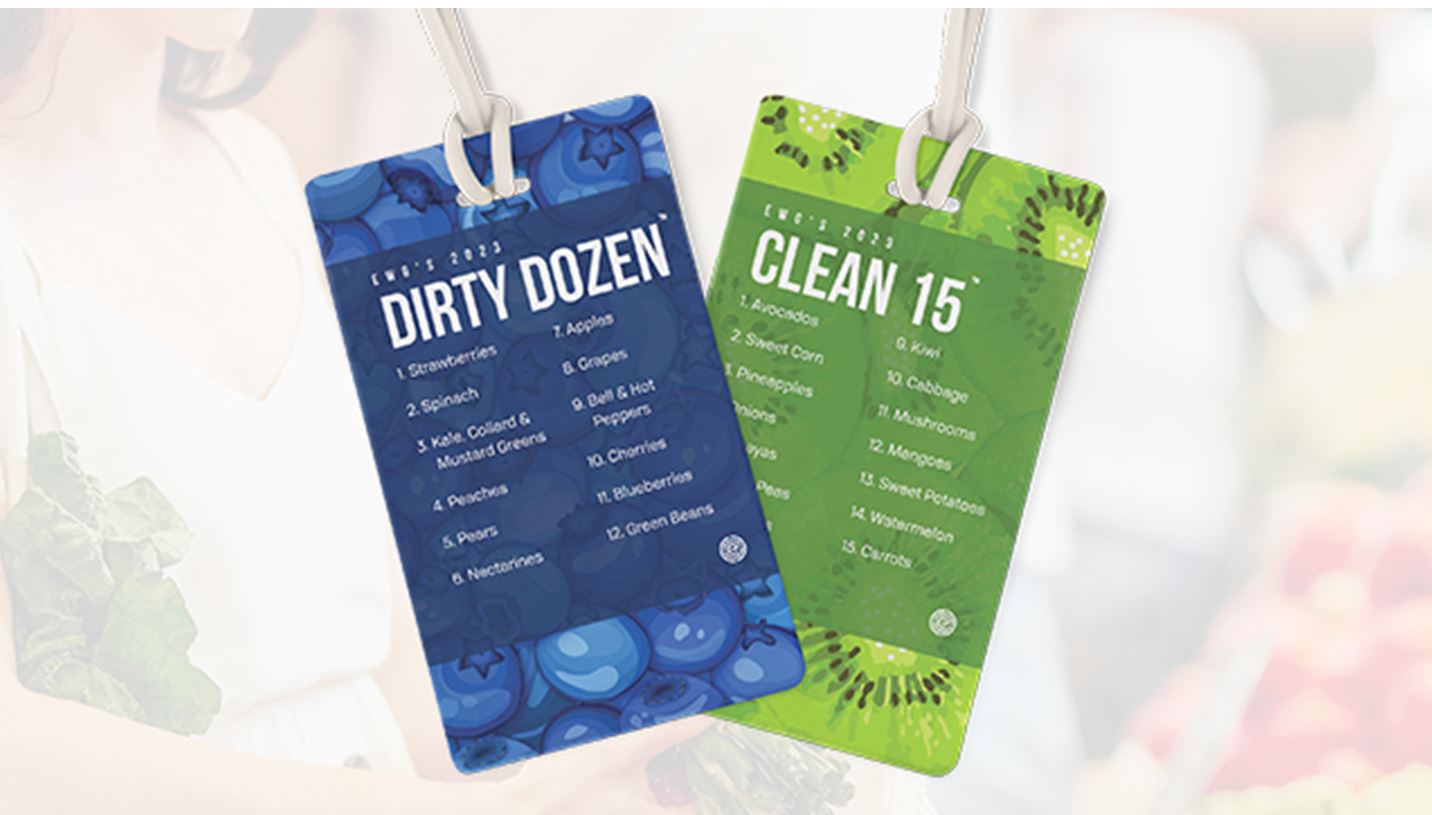
So, we can’t grow all our food, but there’s a list of the foods we should buy organic or grow organic! The EWG (Environmental Working Group) tests foods and products to find out what we are REALLY consuming and its effects on our health. EWG’s 2023 Shopper’s Guide to Pesticides in Produce™ has been released, and the results are shocking!

Yet again, strawberries top EWG’s Dirty Dozen list. 22 different pesticides were detected on a single strawberry sample!
See the full list of fruits and vegetables we recommend you buy organic when possible, because they’re less likely to have traces of pesticides. See the Dirty Dozen’s Full List at http://www.ewg.org/foodnews/full-list.php

Can’t find organic in your local store? Check out EWG’s Clean Fifteen™ list of the fruits and vegetables least likely to have pesticide residues. Stick to this list when organic options aren’t accessible or affordable. See the Clean Fifteen’s Full List at http://www.ewg.org/foodnews/clean-fifteen.php
HOW DOES THIS EFFECT YOU?
Nearly 75 percent of non-organic fresh produce sold in the U.S. contains residues of potentially harmful pesticides, EWG’s 2023 Shopper’s Guide to Pesticides in Produce™ finds. In this year’s guide, blueberries and green beans join our Dirty Dozen™ list of the 12 fruits and vegetables sampled that have the highest traces of pesticides.
Any exposure to pesticides is a problem, given what we know about several ways they can harm humans. But the findings are particularly concerning for children, who are particularly vulnerable to many of the health harms associated with pesticide exposure.
The Shopper’s Guide represents EWG’s analysis of the latest fruit and vegetable testing data from the Department of Agriculture and Food and Drug Administration. The 2023 guide includes data from 46,569 samples of 46 fruits and vegetables. The USDA peels or scrubs and washes produce samples before testing, whereas the FDA only removes dirt before testing its samples. Even after these steps, the tests still find traces 251 different pesticides.
The guide includes our Dirty Dozen as well as our Clean Fifteen™, which shows which fruits and vegetables tested have very low or no traces of pesticides.
Some of the USDA’s tests show traces of pesticides long since banned by the Environmental Protection Agency. Much stricter federal regulation and oversight of these chemicals is needed.
Consumption of fruit and vegetables, organic or not, is critical to a healthy diet and good health. But for shoppers concerned about dietary pesticide exposure, EWG’s Shopper’s Guide, released every year since 2004, provides information about the fruits and vegetables with the highest and lowest pesticide residues, so consumers can make the best decisions for their families.
PESTICIDES – KNOWN TO CAUSE HEALTH PROBLEMS
For this year’s guide, the overall picture remains problematic: Too many pesticides are still found in too high quantities on too much of the produce millions of Americans eat every day.
Many peer-reviewed scientific studies have shown disturbing links between pesticides and human health issues. These findings raise important questions about the safety of pesticide mixtures found on produce.
Research from Harvard University shows that consuming fruits and vegetables with high levels of pesticide residues may lessen the benefits of fruit and vegetable consumption, including protection against cardiovascular disease and mortality.
A recent EWG investigation published in the peer-reviewed journal Environmental Health found that the EPA has failed to adequately protect children from pesticides. For almost 90 percent of the most common pesticides, the agency has neglected to apply the Food Quality Protection Act–mandated children’s health safety factor to the allowable limits.
The threats pesticides pose to children’s health have been known since at least 1993 – 30 years ago – when the National Academies of Science published a landmark study warning of inadequate oversight. The American Academy of Pediatrics recommends parents concerned about their children’s exposure to pesticides consult EWG’s Shopper’s Guide.
Choosing organic fruits and vegetables can almost immediately reduce the amounts of residues in a person’s body, because the harmful chemicals used on non-organic, or conventional, produce are no longer a factor.
WHAT IS THE EWG? A nationwide community of Scientists and Health Advocates
EWG enables families to make the safest choices for our health. At the Environmental Working Group, they believe that you should have easy access to the information you need to make smart, healthy choices. More info about this amazing organization, http://www.ewg.org/who-we-are.
 TFES GARDEN CLUB