By: Don Lewis
Abilitylabs.com
Curiosity is the quiet force that drives every child’s lifelong learning. It’s what fuels creativity, resilience, and joy in discovery. Yet today’s structured routines and digital distractions often smother that spark before it can grow.
Parents — especially those balancing demanding schedules, can still nurture this inner drive through small, intentional shifts in daily life. Supporting curiosity isn’t about adding more activities. It’s about creating space for exploration, connection, and ownership.
Blog Summary: Too Long Didn’t Read (TL;DR)
Children thrive when they’re encouraged to ask questions, make mistakes, and pursue what fascinates them. Model curiosity, protect unstructured time, and let learning connect to real life. Garden, Grow Food, and some other tips! For working parents trying to balance it all, here’s how to foster curiosity and stay present during busy seasons.

Why Curiosity Builds True Motivation
Curiosity doesn’t just make learning fun — it changes the way the brain works. When children follow their interests, their brains release dopamine, reinforcing the desire to explore and learn.
● Intrinsic motivation beats external rewards. Praise for effort builds internal satisfaction.
● Autonomy grows persistently. Letting kids make small choices in learning deepens engagement.
● Wonder creates memory. Lessons tied to emotion and discovery stick longer than rote facts.
According to developmental research from Harvard’s Center on the Developing Child, curiosity strengthens executive function — the cognitive “control center” for focus, planning, and self-regulation.

Create the Conditions for Curiosity
You don’t need expensive tools. You need time, trust, and opportunities to explore.
Curiosity-Ready Home Checklist
● Daily time for open-ended play (no agenda, no screen)
● Access to simple, tactile materials (clay, building blocks, nature finds)
● Books and story prompts within reach — from science to fantasy
● A “wonder wall” for kids’ questions
● Shared activities that mix play and problem-solving
Pro tip: Limit overscheduling. Downtime is the soil curiosity grows in.
You can find hands-on activity ideas for this in theExploratorium Learning Tools collection.
Support Discovery Without Directing It
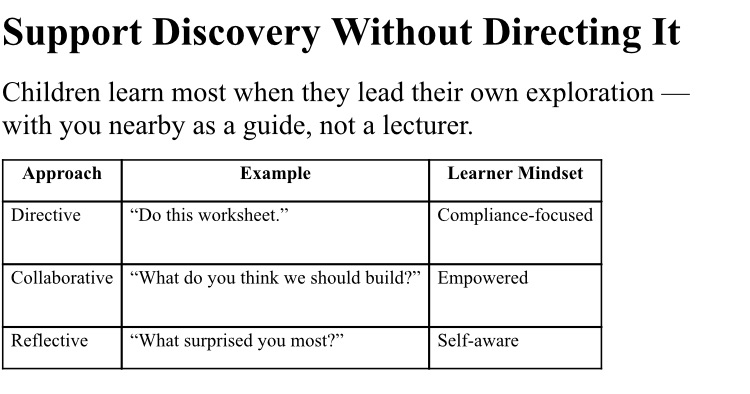
Children learn most when they lead their own exploration — with you nearby as a guide, not a lecturer.
A reflective approach helps children think about their thinking — what educators call metacognition — which enhances problem-solving over time.
HOW-TO: Turn Ordinary Moments into Discovery
1. Model curiosity aloud. “I wonder why that leaf changes color faster than the others.”
2. Ask, don’t answer. “What do you think?” invites reasoning.
3. Link ideas to real life. Cooking becomes chemistry, gardening becomes ecology.
4. Encourage storytelling. Stories help children connect emotion to knowledge.
5. Praise persistence, not perfection. “You kept trying — that’s what scientists do.”
Need inspiration? The documentary library at Curiosity Streamoffers family-friendly examples that show exploration in action.
Make Technology Work for Curiosity
Used well, technology can enhance inquiry instead of limiting it.
● Encourage creative tools like Tinkercad for 3D design and experimentation.
● Visit virtual museums such as The British Museum’s Digital Tour to expand global awareness.
● Pair every online exploration with a physical project — build what you designed, test what you simulated.
Technology becomes valuable when it extends the physical world, not replaces it.
Growing Curiosity in the Garden
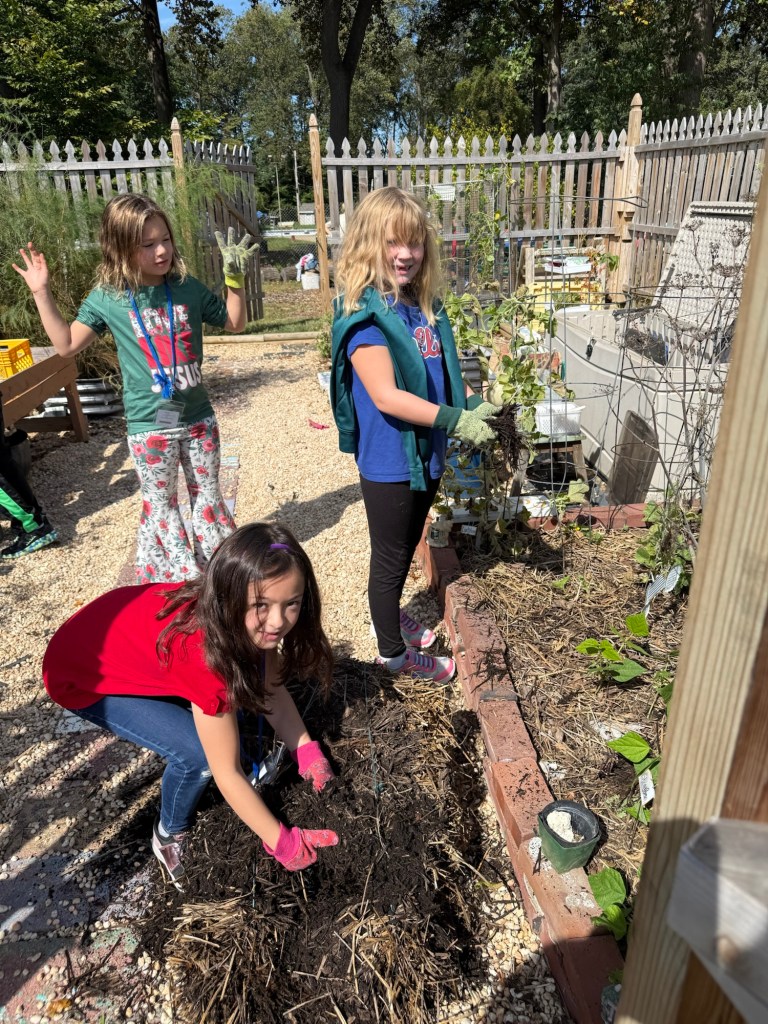
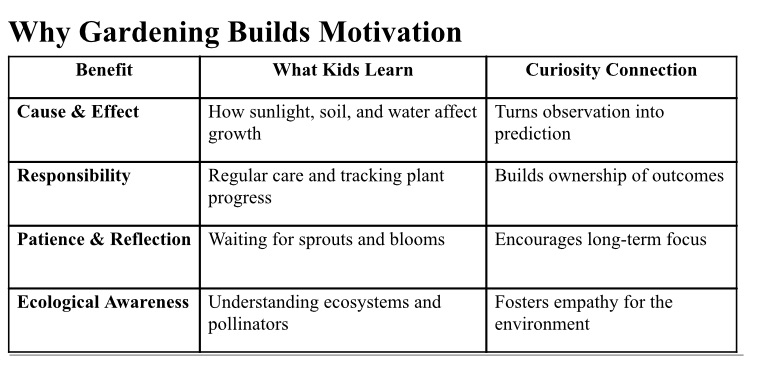
Few activities nurture curiosity, patience, and responsibility as naturally as gardening. The process of planting, observing, and caring for living things connects children directly with science — and with a sense of wonder that screens can’t replicate.
Gardening turns to ordinary questions (“Why do leaves curl?” or “What makes soil healthy?”) into experiments children can see unfold over time.
How to Turn Gardening into a Learning Adventure
1. Start small. Use a few pots on a balcony or windowsill — herbs like basil, mint, or thyme grow fast and offer quick wins.
2. Let kids lead. Ask them to choose what to plant, research growth needs, and decorate plant markers.
3. Turn mistakes into lessons. A wilted leaf or failed seed is a chance to ask why and try again.
4. Connect science and creativity. Record growth in a “plant journal” or use time-lapse photos to track change.
5. Expand curiosity outdoors. Visit a local botanical garden or explore community plots through KidsGardening.org, which offers free family projects and guides.
Tip: Gardening isn’t about perfection — it’s about pattern recognition. Every sprout, setback, and soil check trains children to observe and think like scientists.
As kids nurture plants, they begin to see learning as growth itself — something that thrives when given care, curiosity, and time.
Motivation Through Purpose
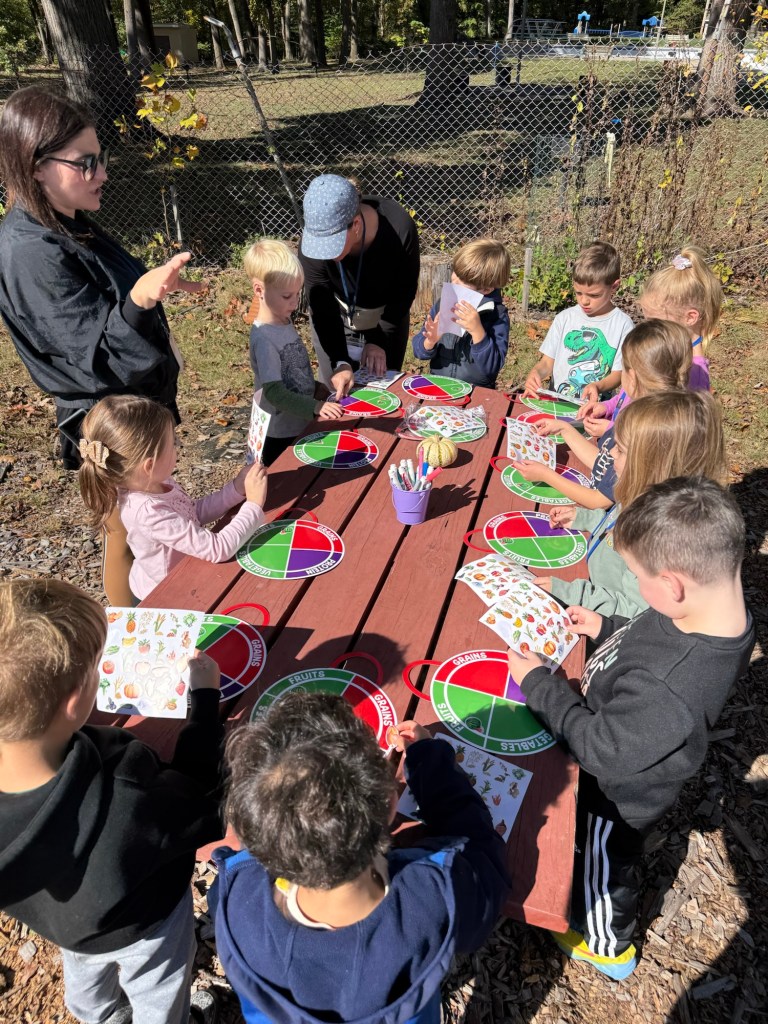
When children understand the why behind learning, curiosity becomes self-fueling.
● Let them teach you what they’ve discovered — a strong reinforcement loop.
● Create micro-projects that make a visible difference, like planting herbs or building a simple gadget.
● Expose them to role models through media like Mind in the Making, which highlights real-world learning stories.
FAQ
Q1: My child loses interest fast — what should I do?
Rotate how you approach topics. A bored child might need a new format, not a new subject.
Q2: How do I balance freedom and structure?
Set boundaries that define when, not what. Let the child choose activities within safe time frames.
Q3: What if I don’t feel “curious enough” myself?
Admit it — then explore together. Curiosity isn’t expertise; it’s openness.
Q4: Is curiosity ever a distraction from school?
Curiosity improves focus by connecting learning to meaning. The challenge isn’t curiosity — it’s confinement.

GLOSSARY
● Intrinsic Motivation: Learning driven by interest, not reward.
● Scaffolding: Guidance that supports independence.
● Executive Function: Brain processes for planning and regulation.
● Controlled Autonomy: Guided freedom that sustains self-direction.
Curiosity is not a luxury — it’s a lifelong engine for growth.
When parents model wonder, allow mistakes, and create space for questions, children develop into self-motivated, engaged learners ready to navigate the world with confidence and creativity.
Protect the question. The answers will come.
Discover the joy of gardening and community at the TFES Garden Club, where we grow food and young minds together. Join us for exciting events and volunteer opportunities that make a difference!
###
 TFES GARDEN CLUB