Written By: Don Lewis
Abilitylabs.com
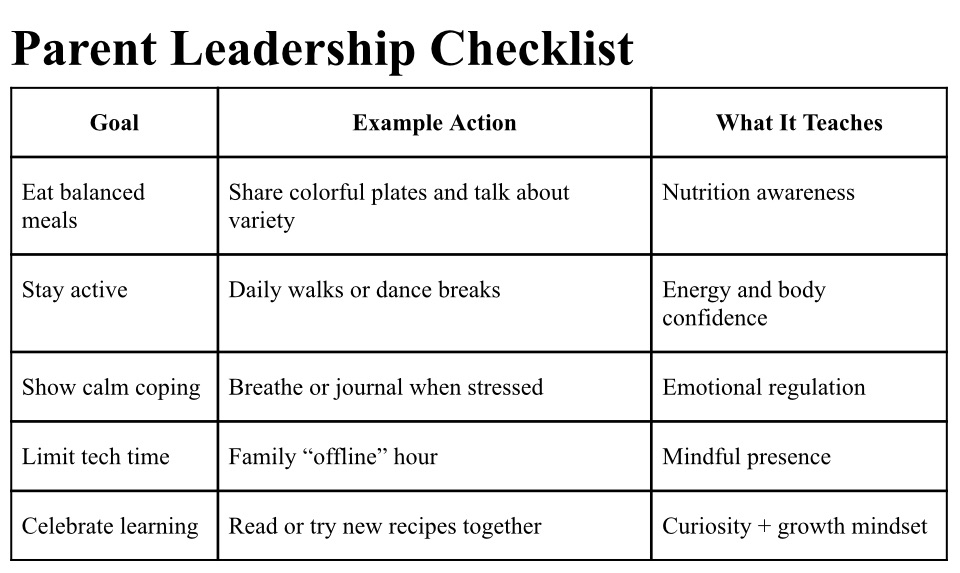
Parents play the most enduring role in shaping how children view health, balance, and self-care. Every meal shared, walk taken, and calm response modeled becomes a lesson that lasts beyond childhood. By turning everyday routines into learning moments, families can make wellness feel natural rather than forced. The goal isn’t perfection—it’s progress, curiosity, and connection built one healthy choice at a time.
Key Insights
● Kids imitate patterns more than instructions.
● Model balanced routines, cook or garden together, and make health conversations normal.
● Use visuals and simple systems to help kids track progress and celebrate effort.
Growing Health Together: The Gardening Effect
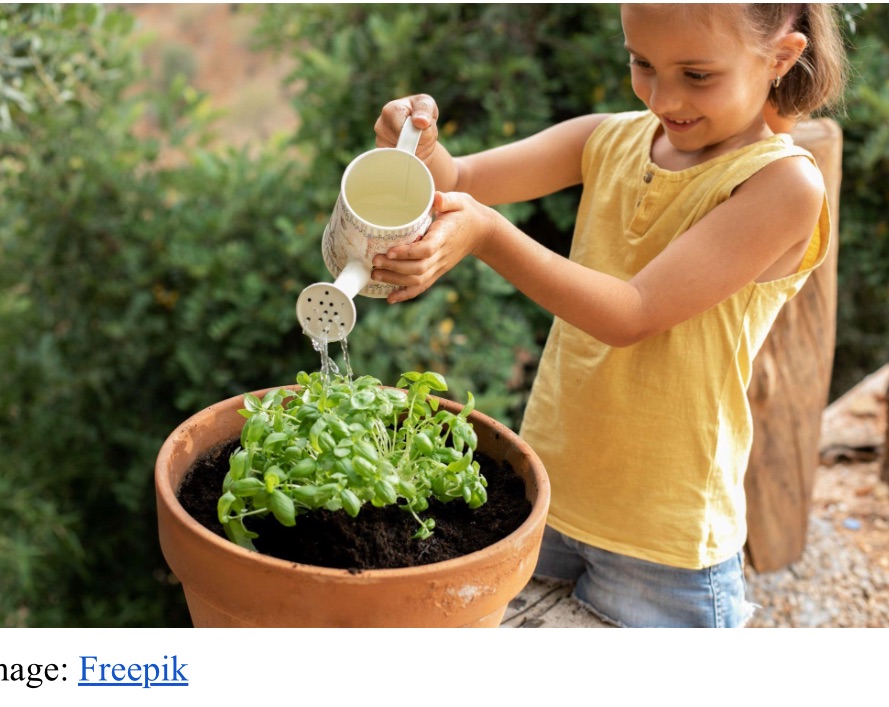
Gardening is a low-tech, high-impact family activity that nurtures patience, care, and nutrition awareness. It teaches that good things grow with time and attention.
Benefits
● Builds connection with nature and food origins
● Encourages responsibility (“Did you water your tomato today?”)
● Reduces screen time and stress
● Strengthens curiosity about vegetables and herbs
Find simple, child-friendly projects at KidsGardening and starter-garden tips at Better Homes & Gardens.
How-To: Create a Family Health Routine That Sticks
1. Define what “healthy” means together—include mental, emotional, and physical ideas.
2. Pick two daily anchors (e.g., morning stretch, evening reading).
3. Visualize habits using a chart or fridge tracker.
4. Make it fun—add songs, timers, or themed days (“Fruit Friday”).
5. Reflect weekly—ask, “What felt good this week? What do we keep?”
See additional routine-building guidance at Healthline.
Lifelong Learning as a Foundation of Healthy Habits
Healthy behavior isn’t inherited—it’s learned through repetition and example. When parents stay curious and show that learning never ends, children connect growth with wellbeing.
By furthering your own education—such as pursuing an online degree—you demonstrate that continuous learning builds both skill and self-confidence. If you’re interested in exploring how thinking and emotions guide behavior, this resource may help.
You can also explore self-growth ideas through Verywell Mindand health habit guides from PsychCentral.
FAQs
Q1. When should we start health habits?
Start early—toddlers love imitation. Even rinsing vegetables builds ownership.
Q2. What if my child refuses new foods?
Use the “one bite, no fight” approach. Offer small tastes regularly and pair with familiar favorites. Ideas at EatRight.
Q3. How much screen time is okay?
Use the 2-for-1 rule: two active or creative tasks for every hour of screen use. Balanced-screen guide at Common Sense Media.
Q4. How do we encourage emotional health?
Model openness—share your own coping methods.
Signals Kids Actually Notice
● You keep promises to move or cook together.
● You explain your decisions (“I’m choosing water because I need focus today”).
● You try new things with them—not just for them.
● You talk about feelings without shame or hurry.
More on modeling healthy coping: Calm Blog.
Product Spotlight: Big Life Journal – Growth Mindset Journal for Kids
Healthy routines start with reflection and self-awareness — both for parents and children. The Big Life Journal (Ages 7–10) helps kids build resilience, gratitude, and consistency through guided prompts and weekly challenges. Families can use it alongside meal planning, gardening logs, or bedtime reflections to reinforce healthy habits emotionally as well as physically.
Glossary
● Anchor habit: A small, reliable action that sparks another healthy behavior.
● Autonomy support: Guiding children by giving them structured choices.
● Exposure effect: Gradual comfort gained through repeated experience.
● Growth mindset: Belief that ability improves through effort.
● Self-efficacy: Confidence built through successful practice.
Healthy habits don’t come from rules—they grow from everyday choices children see and share with their parents. By modeling balance, curiosity, and care, families create a living example of wellness that children can carry forward. Gardening, learning, and small daily rituals become the foundation for resilience and joy. When health feels connected to love and discovery, it becomes a lifelong way of living, not just a checklist to follow.
 TFES GARDEN CLUB